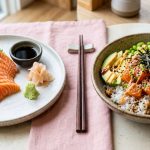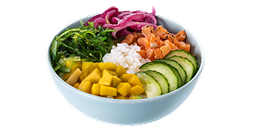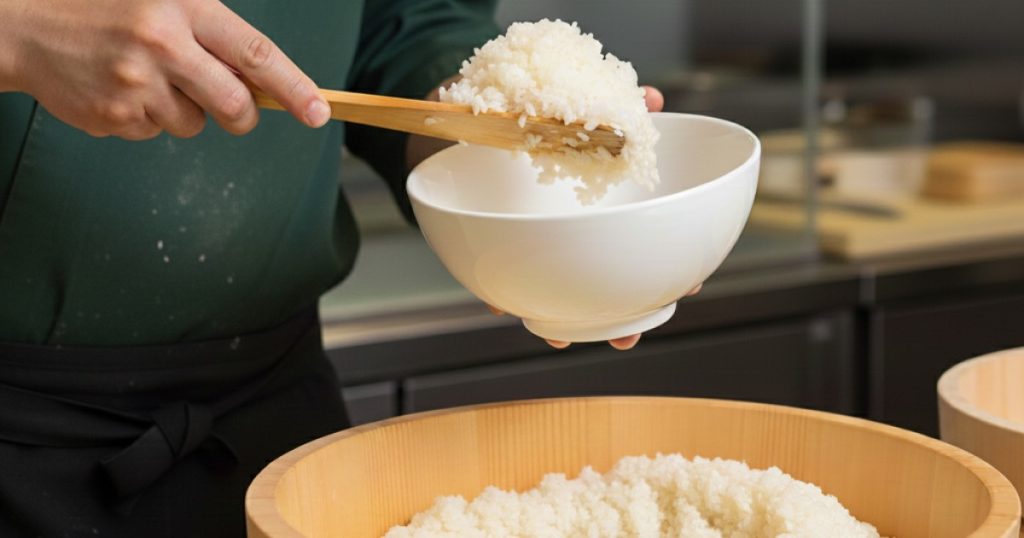
Sushi rice is the best rice for poké bowls because its sticky texture holds the fish and toppings together, and its sweet and tangy seasoning balances the richness of raw fish. It’s the base that makes every bite feel complete.
The fish usually gets all the attention in a poké bowl, but the rice is what holds everything together, both in texture and in flavour. Use the wrong rice, and your bowl can end up loose, bland, and hard to eat. That’s why many homemade bowls fall flat when they’re made with regular long-grain rice.
In this guide, we explain what makes sushi rice different, why it works so well in poké, and how to cook and season it at home step by step.
What is Sushi Rice?
The term “sushi rice” actually refers to two things: the type of grain and the specific method of seasoning it.
1. The Grain: Sushi rice is exclusively a variety of Japanese short-grain rice. These plump, round grains are high in a type of starch called amylopectin. This high starch content is the key functional component that makes the rice glutinous, though it contains no actual gluten. When cooked, this starch gelatinizes, creating the necessary stickiness and cohesion.
2. The Seasoning: The cooked grains become sushi rice only after they have been mixed with sushi vinegar (Sushizu). This is typically a simple, balanced blend of rice vinegar, sugar, and salt.
Why Sushi Rice Works Best
Sushi rice isn’t just a tradition. Every part of it, from the grain to the seasoning, plays a role in making your poké bowl taste and feel the way it should. Here’s why it works so well.
Functional Cohesion
Sushi rice is a Japanese short-grain variety that is high in amylopectin, a type of starch that makes the cooked grains naturally sticky and cohesive. When the rice cooks, this starch softens the grains and helps them cling to each other instead of falling apart.
That stickiness makes a big difference in a poké bowl. Unlike fluffy, long-grain rice like basmati, where each grain stays separate, sticky short-grain rice allows the grains to cling together with the raw fish, sauces, and crunchy toppings. So every bite stays together, and you’re not left with a pile of loose rice at the bottom of your bowl.
Acidity & Flavor Balance
What turns plain short-grain rice into sushi rice is the seasoning. The rice is dressed with sushizu, a simple blend of rice vinegar, sugar, and salt.
This sweet and sour tang cuts straight through the heavy fats and rich oils of raw fish like salmon or tuna, keeping the bowl from feeling greasy. The result is a bowl that tastes fresh and balanced, even when you add creamy toppings like avocado.
Temperature Contrast
Serving sushi rice warm or at room temperature creates a pleasant contrast against the cold, chilled fish and crisp vegetables on top. This mix of temperatures makes each bite more interesting and more comfortable to eat. Warm rice also brings out the flavour of the seasoning, while cold rice tends to taste flat and feel firm.
Chopstick-Friendly
The stickiness of sushi rice makes it much easier to pick up the base and toppings cleanly with chopsticks. You can grab the rice, fish, and toppings in one bite without chasing loose grains around the bowl. It’s a small detail, but it makes the whole meal more enjoyable.
The Professional Method: Cooking and Seasoning
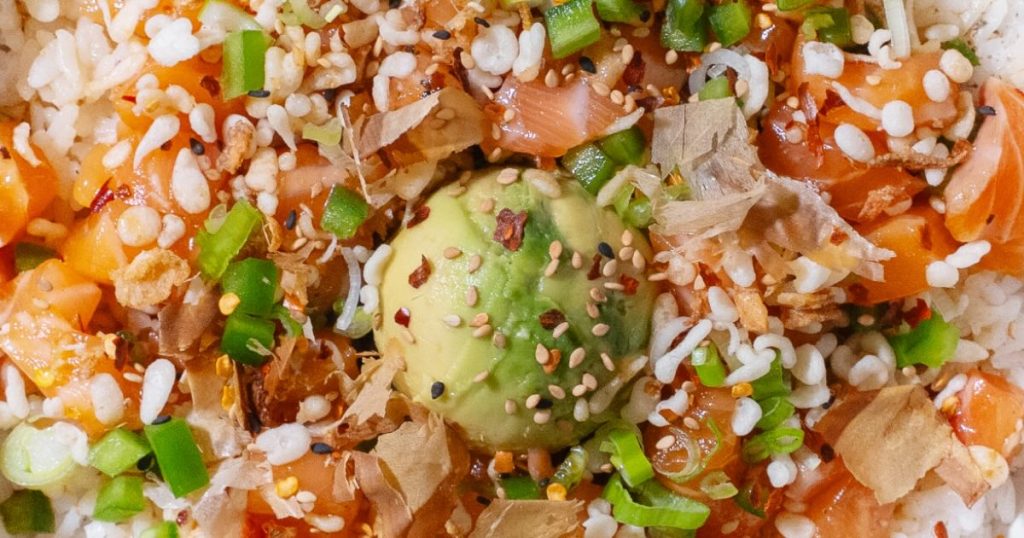
Mastering the rice is a three-stage process. Here is how to cook sushi rice like a pro:
Stage 1: Washing for Texture
Before cooking, you must vigorously rinse the rice (6 to 10 times) until the water runs almost completely clear.
This removes the excess starch powder coating the outside of the grains, which would otherwise turn the rice mushy or gluey. Rinsing ensures the cooked grains are sticky, but still maintain their individual shape.
Stage 2: Cooking for Bloom
Use the 1:1 ratio, by volume, of rice to water. After simmering for 15-20 minutes, turn off the heat and let the rice steam, covered, for another 10-15 minutes. This crucial rest allows the grains to fully absorb all the moisture without becoming crushed.
Stage 3: The Pro Seasoning Technique
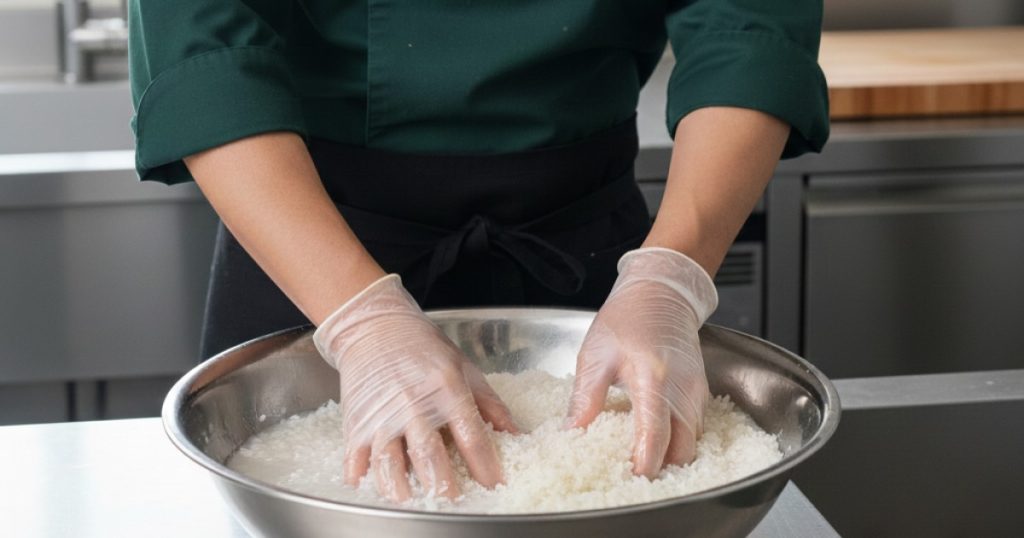
Gently heat your Sushizu (rice vinegar, sugar, salt) until the solids are dissolved, but do not boil it. Transfer the hot rice to a wide, non-metallic bowl. Pour the seasoning over the rice and use a wooden paddle to slice or cut the seasoning in; never stir it. Stirring crushes the soft grains and releases too much starch.
Pro Tips for Perfect Poké Rice
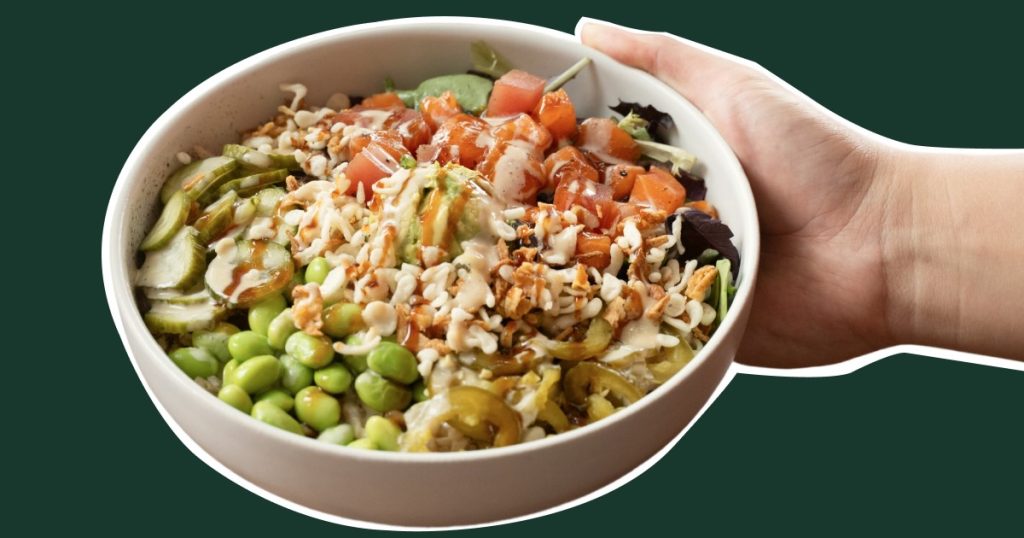
Tip 1: The Cooling Secret: Always fan the rice vigorously as you mix in the Sushizu. This step is critical because rapid cooling creates the signature glossy sheen and stops the cooking process, locking in the perfect texture.
Tip 2: The Final Rest: After seasoning and cooling, cover the rice with a damp cloth or paper towel and let it rest for 10 minutes. This allows the excess moisture to be absorbed and the flavors to fully meld.
Tip 3: The Right Temperature: For the best flavor contrast, sushi rice should always be served at or slightly above room temperature. Serving it cold dulls the acidity and makes the texture hard.
Conclusion
Mastering what sushi rice is and learning how to cook it is the single greatest step you can take to elevate your homemade poke bowls. The effort in washing, cooking, and seasoning is what transforms a simple meal into an authentic culinary experience.
To experience truly expertly prepared rice every time, visit the best poke restaurant in Canada, Olu Olu Poké, where the foundation of every bowl is handled with professional care and respect for tradition.
FAQs
Q1. Should I use sushi rice for a poke bowl?
Yes, sushi rice is one of the best choices for a poke bowl. Its sticky texture holds the fish and toppings together, and its sweet and tangy seasoning balances the richness of raw fish. If you’re making poke at home, it’s worth the extra step of seasoning your rice.
Q2. What type of rice is best for poke bowls?
Japanese-style short-grain rice is the best choice because it cooks up soft and sticky. Medium-grain rice like Calrose also works well. If you want something with more fibre, brown rice or a brown rice and barley mix is a great option, and you’ll find it in bowls like the Smiling Buddha and Omao Omao at Olu Olu.
Q3. Why is sushi rice so much better?
Sushi rice has more of a sticky starch called amylopectin, which helps the grains hold together. It’s also seasoned with rice vinegar, sugar, and salt, which gives it a light tangy flavour that pairs well with fish. Regular long-grain rice is fluffier and plainer, so it doesn’t hold the bowl together or add as much flavour.
Q4. Is a poke bowl with sushi rice healthy?
Yes, a poke bowl with sushi rice can be part of a healthy meal. A cup of white or sushi rice has about 200 to 240 calories, and the seasoning adds a little sugar and salt. Pairing it with lean protein, plenty of vegetables, and a light sauce keeps your bowl balanced. If you want more fibre, brown rice is a good swap.
Q5. How do you season sushi rice for a poke bowl?
Gently heat rice vinegar, sugar, and salt until the sugar and salt dissolve, without letting it boil. Spread your freshly cooked rice in a wide, non-metal bowl, pour the seasoning over it, and fold it in with a wooden paddle using cutting motions instead of stirring. Fan the rice as you mix to cool it down and give it a nice shine.