



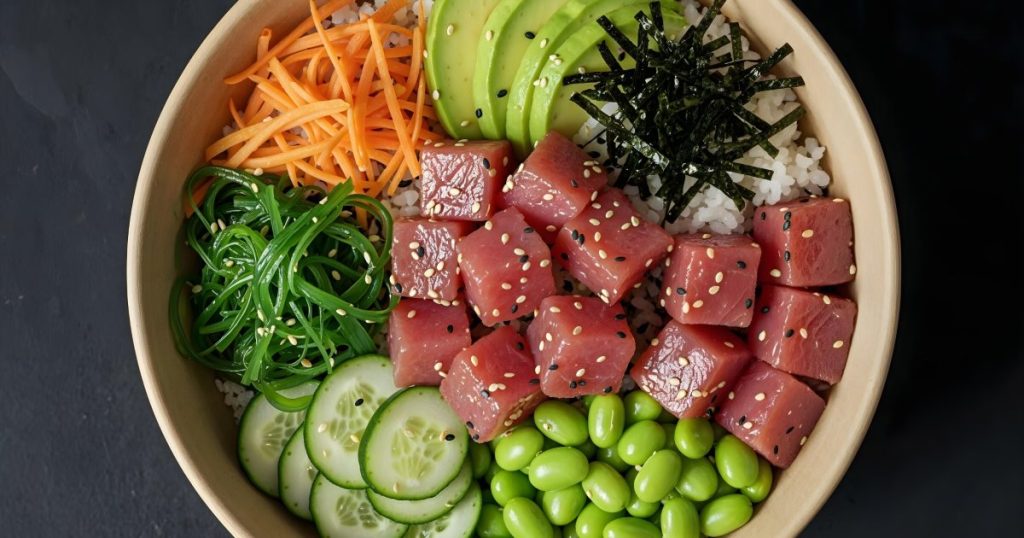
When the word “poké” comes up, what flashes into your mind? For nearly everyone outside of Hawaii, it’s the same image: cubes of deep-red, glistening Ahi tuna tossed in a savory marinade. This association is so strong that many assume if it’s not tuna, it’s not real poké.
Is this true? Is Ahi tuna mandatory for the dish to qualify as poké?
The answer is both simple and complicated: No, poké is not defined by tuna, but Ahi tuna is absolutely the reigning, modern champion of the dish. To understand why, we have to look past the modern bowl and dive into its history.
Why People Think Poke is Tuna

The reason Ahi (Yellowfin or Bigeye tuna) dominates the conversation comes down to two factors: visual appeal and commercial history.
Ahi’s Visual Appeal
Ahi tuna is perfect for raw preparation. Its deep red hue, firm structure, and high-fat content create a texture that is buttery, clean, and holds up beautifully to heavy marination. Essentially, Ahi is the sashimi-grade benchmark, and once it became widely available, it instantly became the preferred choice for those making and consuming raw fish salads.
The Global Standard
In the 1970s and 1980s, commercial deep-sea fishing made Ahi readily available. At the same time, the dish’s flavor profile changed dramatically, influenced by Asian culinary traditions that introduced soy sauce, sesame oil, and rice vinegar to the marinade. This created the Shoyu Ahi Poké, a flavor combination that became the undisputed gold standard and the single most iconic dish associated with Hawaii outside the islands.
For most of the world, “Poké” is simply shorthand for “Ahi Poké.”
The True Definition: It’s About the Cut, Not the Catch
To understand the definition, we must go back to the source: the language.
The Hawaiian word poké (poh-keh) refers strictly to the preparation method: to slice or cut crosswise into pieces. The word has nothing to do with fish or seafood; it describes the action.
The Original Proteins
Before commercial fishing made Ahi ubiquitous, the original poké was made with whatever was caught close to shore. This included:
- Coastal Reef Fish: Small, freshly caught fish were cleaned, diced, and prepared immediately.
- Aku (Skipjack Tuna): A smaller, darker, and oilier variety of tuna than Ahi, this was often used.
- He’e (Octopus): This protein, often slightly cooked or tenderized, was a traditional favorite.
The Original Marinade
The ancient version of the dish was minimalist and focused purely on enhancing the flavor of the fresh catch. The original seasonings contrast sharply with the modern flavor explosion: Hawaiian sea salt, limu (seaweed), and inamona (a relish made from roasted kukui nuts). This historical recipe proves that the definition of poké has always been centered on the diced, seasoned preparation of any available protein.
Beyond Ahi: What Other Proteins Are Used?
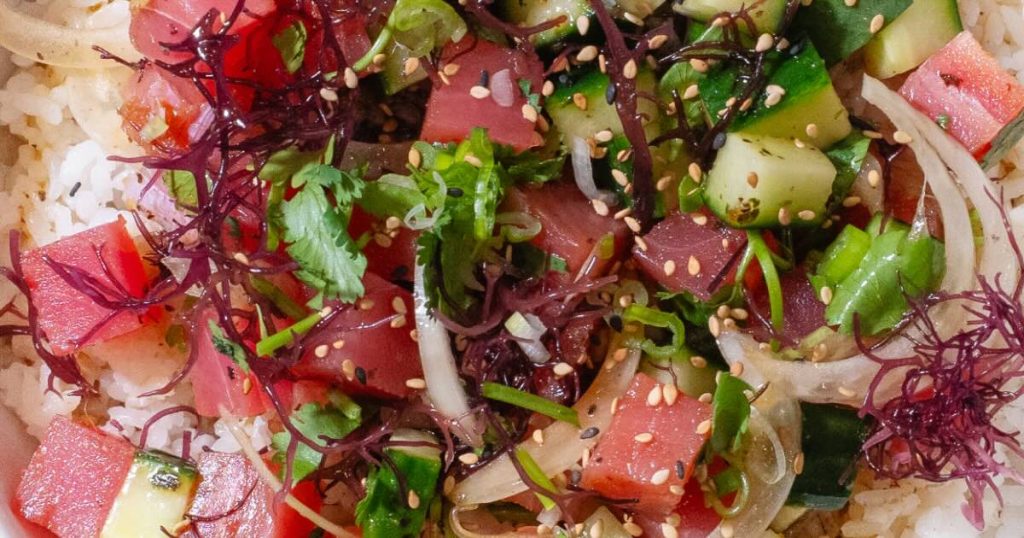
Today, the world of poké is richer than ever, offering alternatives that are now staples both in Hawaii and globally.
Traditional & Local Alternatives
While Ahi remains the most classic, other seafood is constantly being diced and seasoned:
- Salmon: Though not traditionally Hawaiian, salmon has become the most popular non-tuna option worldwide and is widely accepted on the islands.
- Shrimp (Cooked): Often used in a cooked or boiled state, diced and mixed into light, citrus-based marinades.
- Tofu (Vegan): Cubed, pressed, and marinated tofu is a fantastic plant-based alternative that holds up well to flavorful sauces.
- Katsu Chicken: A great example of fusion; cooked, breaded, and diced chicken is often used in non-traditional bowls for those who prefer meat.
- Other Cooked Seafood: Imitation crab (surimi) and other cooked shellfish are frequently used, especially for those who prefer cooked seafood.
Conclusion
So, is poké defined by tuna? No. The word poké is the name of a method—the act of cutting, which creates a dynamic, customizable cuisine.
However, the Ahi tuna preparation is defined by its history, flavor, and visual perfection, earning its place as the undisputed icon and the single most important recipe in the poké world.
If you’re in the Montreal area, experience the best of modern poké tradition by visiting Olu Olu Poké, widely known as the best poke restaurant in Montreal for fresh, flavorful, and perfectly balanced poké bowls.
Key Takeaways
- The Hawaiian word “poké” simply means “to slice or cut crosswise,” referring to the preparation method, not the specific protein used.
- Ahi (Yellowfin/Bigeye) tuna became the iconic choice due to its superior texture, visual appeal, and influence from Japanese/Asian marinades (Shoyu Poké).
- Traditional, ancient poké used local reef fish or Aku (Skipjack tuna) and was seasoned simply with sea salt, seaweed (limu), and kukui nut relish (inamona), not complex sauces.
- Today’s cuisine widely embraces non-tuna options, including Salmon (the most popular alternative), cooked shrimp, tofu, and even katsu chicken.
- The beauty of poké lies in its ability to adapt, allowing for a diverse range of proteins, marinades, and toppings beyond the classic Ahi preparation.