



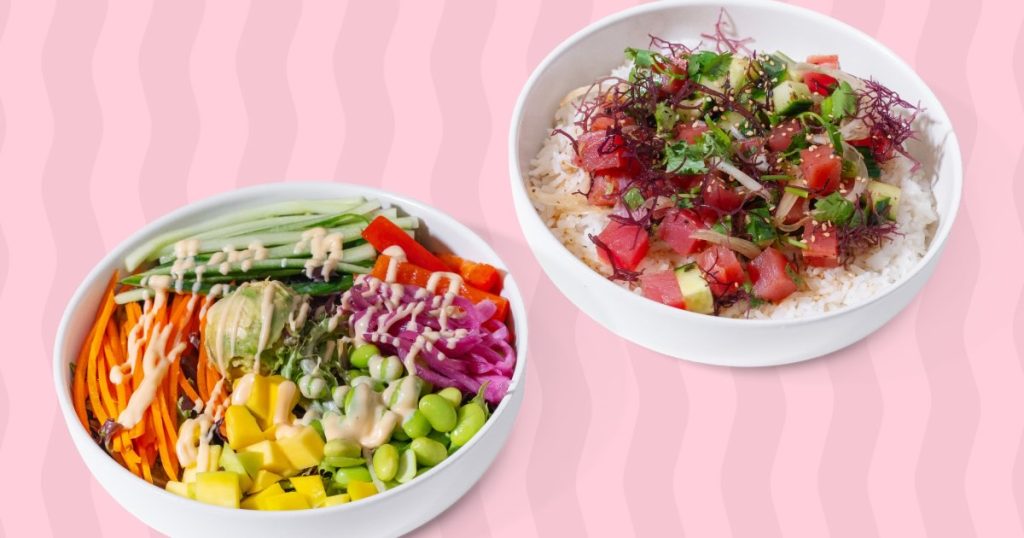
Most poké bowls have between 400 and 700 calories, but bowls built with creamy sauces, extra rice, and heavy toppings can easily go past 850 to 1,000 calories.
That gap comes down to the choices you make when you order. Poké bowls are fresh, colourful, and easy to customize, which is exactly why they are such a popular healthy lunch. But that same freedom means two bowls that look alike can be hundreds of calories apart.
If you are tracking your macros or trying to eat in a calorie deficit, this guide is for you. We broke down the poké bowl calories in every part of the bowl so you can build a meal that fits your goals every time.
Calorie Breakdown by Component
Here is roughly how many calories each part of your poké bowl adds. These are estimates, and exact numbers depend on portion size and recipe.
Bases (per 1 cup)
- Mixed greens or salad base: about 10 to 25 calories
- White or sushi rice: about 200 to 240 calories
- Brown rice or forbidden rice: about 200 to 215 calories
- Noodles: about 230 calories
Proteins (per 4 oz)
- Shrimp: about 110 to 120 calories
- Ahi tuna: about 120 to 150 calories
- Marinated tofu: about 140 to 180 calories
- Chicken: about 165 to 185 calories
- Salmon or albacore: about 180 to 230 calories
Vegetables and Add-Ins (per ¼ to ½ cup)
- Cucumber, carrots, radish, or scallions: about 5 to 20 calories
- Edamame: about 50 to 90 calories
- Seaweed salad: about 40 to 70 calories
- Avocado: about 50 to 125 calories per serving
Sauces (per 1 tbsp)
- Ponzu or wasabi shoyu: about 15 to 30 calories
- Teriyaki or traditional Hawaiian: about 30 to 35 calories
- Sesame ginger or miso: about 40 to 70 calories
Crunchy Toppings (per serving)
- Nori or bonito flakes: about 10 to 20 calories
- Furikake or garlic chips: about 30 to 70 calories
- Crispy tempura flakes: about 80 calories
- Cashews or macadamia nuts: about 90 to 160 calories
Is Poké Good for a Caloric Deficit?
Yes, poké is one of the best and most effective choices for a caloric deficit and successful weight loss.
The high nutritional value and high satiety of a properly built bowl are what make it shine. The combination of high-quality, lean protein (fish) and high fiber (vegetables, brown rice) provides immense satiety for a relatively low caloric investment. This keeps you feeling full longer, which is the most crucial factor in preventing hunger spikes and maintaining a caloric deficit.
Poké also delivers dense nutrients like Omega-3s and essential vitamins, ensuring that while you are eating fewer calories, your body is still receiving high-quality fuel.
How to Choose Poké if You Are on a Diet
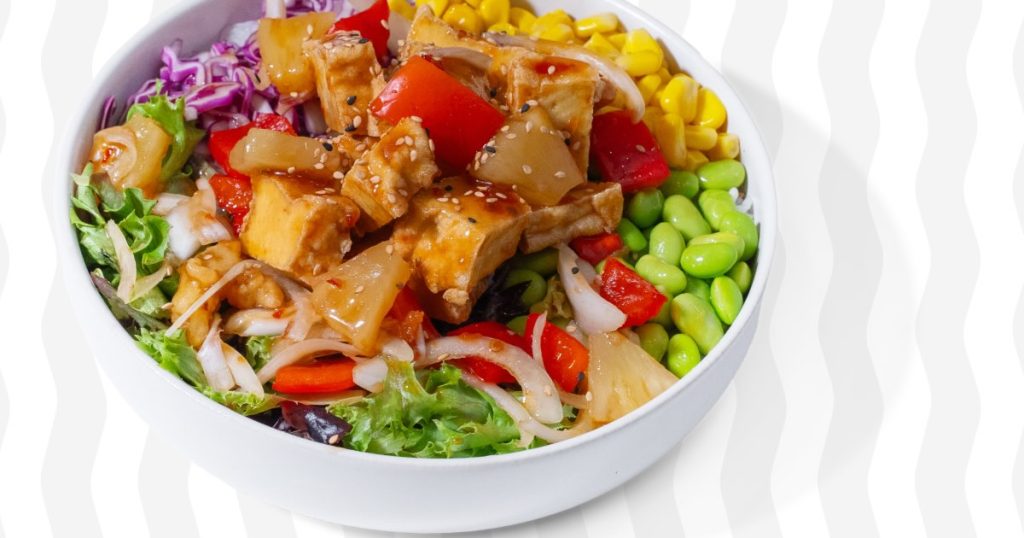
Mastering customization is the secret to building low-calorie poke bowls consistently. Follow these steps when ordering at any poke bowl restaurant:
Step 1: Control the Foundation
The base is the primary source of carbohydrates. To control calories, optimize complex carbs, and fiber.
- Best Choices: Mixed greens, zucchini noodles, or brown rice.
- Avoid/Limit: White sushi rice (higher glycemic index and density) and never order a double scoop.
Step 2: Choose the Purest Protein
Prioritize lean protein sources for muscle preservation and high satiety.
- Best Choices: Ahi tuna, shrimp, or plain tofu (high protein-to-calorie ratio).
- Avoid: Pre-mixed options like spicy tuna/salmon mix, which are often combined with heavy mayonnaise or processed oils, adding unnecessary fat and calories.
Step 3: Defuse the Calorie Bomb
Sauces are the single biggest area for hidden calories.
- Best Choices: Ponzu, light soy sauce, or simple vinaigrette.
- Crucial Rule: Always ask for the sauce on the side. This single action allows you to control the portion, often saving 150–250 calories per meal.
Step 4: Smart Topping Choices
Add crunch and fiber using fresh ingredients instead of fried ones.
- Best Choices: Cucumber, edamame, pickled ginger, seaweed salad.
- Limit: Avocado (healthy but calorie-dense due to fat content) and high-sugar fruits like mango or pineapple.
- Strictly Avoid: Fried onions, tempura flakes, and crispy noodles.
Recommendations from Olu Olu Poké
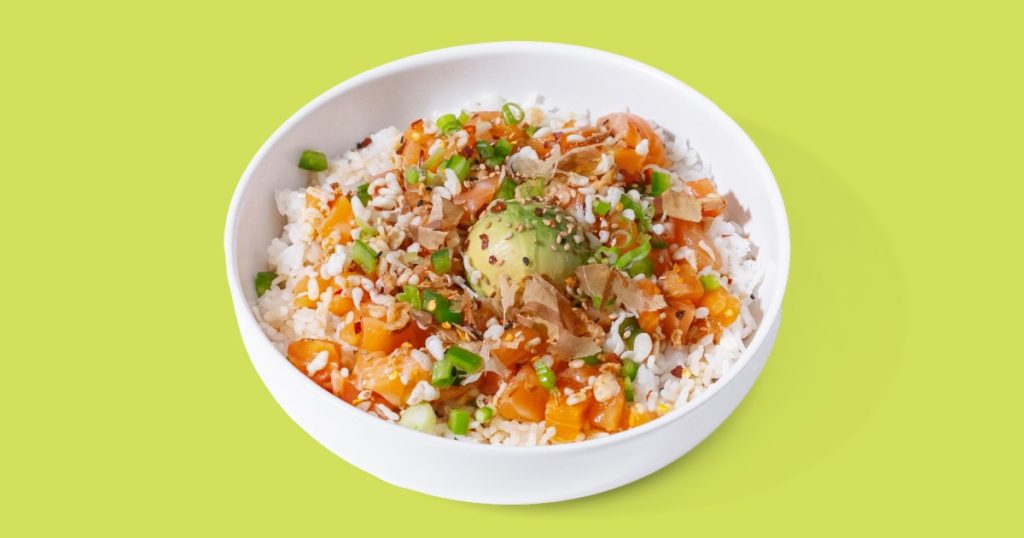
To see how these healthy poke bowl tips translate in the real world, let’s look at the menu from Olu Olu, widely regarded as the best poke restaurant in Montreal for quality and variety.
1. The Best Low-Calorie/Vegan Choice: Smiling Buddah
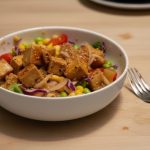
This bowl uses brown rice, barley, and tofu with a light shoyu sauce. Tofu is one of the leanest proteins available, and shoyu is a low-fat seasoning.
Ask for the sauce to be applied very lightly or served on the side, and request a half-greens/half-rice base.
2. The Best Balanced/Healthy Choice: Omao Omao
Built on a mixed base of brown rice, barley, and mixed greens, with high-quality marinated salmon and tuna. This hits all the necessary recovery macros.
The bowl includes creamy ponzu and teri-unagi sauce, which should be requested on the side to manage fat and sugar content. This keeps the fat from the salmon healthy, not excessive.
Conclusion
The power of the poké bowl lies entirely in its personalization. Poké bowl calories are not static; they are determined by your choices.
Armed with these four healthy poke bowl tips, controlling the base, choosing lean protein, defusing the sauce bomb, and prioritizing fresh toppings, you can confidently navigate any poke bowl restaurant menu and create a healthy, satisfying meal perfectly tailored to your dietary goals every time.
FAQs
Q1. Can poke bowls be 1,000 calories?
Yes. A poke bowl can go past 1,000 calories when it has a double scoop of white rice, creamy sauces, avocado, nuts, and fried toppings like tempura flakes. Most standard bowls stay between 400 and 700 calories, so the difference comes down to how you build it.
Q2. How many calories are in my poke bowl?
Add up the main parts of your bowl. A cup of rice is about 200 to 240 calories, 4 oz of fish is about 120 to 230 calories, and each tablespoon of sauce adds about 15 to 70 calories. Vegetables add very little, while crunchy toppings and nuts can add 80 to 160 calories per serving.
Q3. Is a poke bowl OK for weight loss?
Yes. A poke bowl made with a lean protein, a high-fibre base like brown rice or greens, fresh vegetables, and a light sauce is a great choice for weight loss. The protein and fibre help you stay full longer, which makes it easier to stick to a calorie deficit.
Q4. Is brown rice or white sushi rice better for weight loss?
Brown rice is the better choice. It contains more fibre, which helps you feel full, and has a lower glycemic index than white sushi rice, helping keep your blood sugar steady.
Q5. Should I choose salmon or tuna for fewer calories?
Ahi tuna is lower in calories, at about 120 to 150 calories per 4 oz compared to about 180 to 230 for salmon. Salmon has more omega-3 fats, though, so both are good choices.