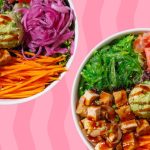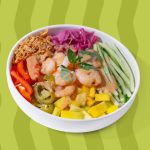




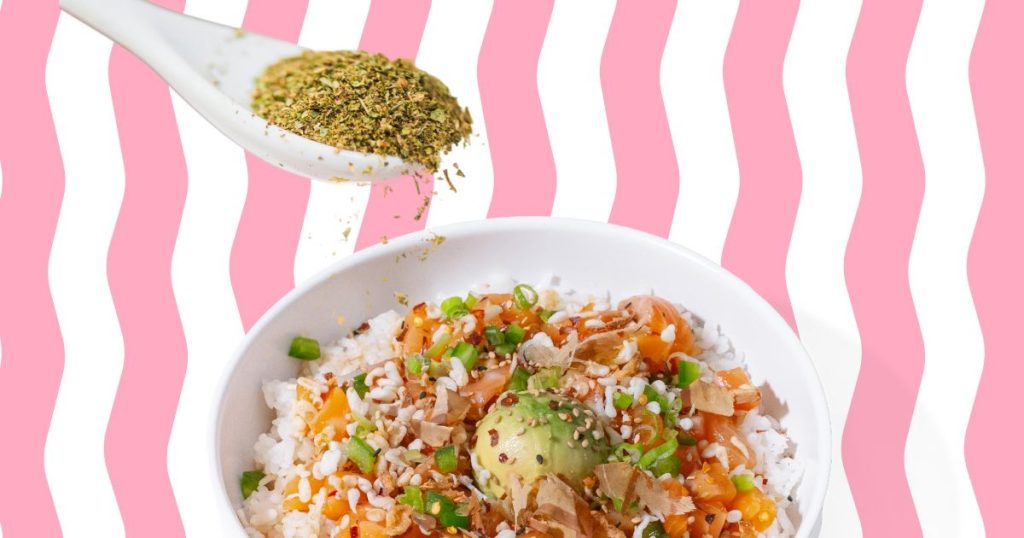
When you receive a fresh poke bowl at Olu Olu, your eyes are usually drawn to the bright colors of the salmon, the creamy green of the avocado, or the vibrant mango. But if you look closer, you will see a dusting of tiny black, white, and green flakes scattered over the top. This is not just a random garnish for decoration. It is a traditional Japanese seasoning called furikake, and it is arguably the most important finishing touch in the entire bowl.
If you have ever wondered what furikake seasoning is, you are not alone. While it has been a staple in Japanese households for over a century, it has recently become a favorite among Asian food lovers in Montreal. It is the secret weapon that balances the flavors of the fish, the rice, and the sauces, making every bite feel complete.
The Anatomy of Furikake: Core Ingredients

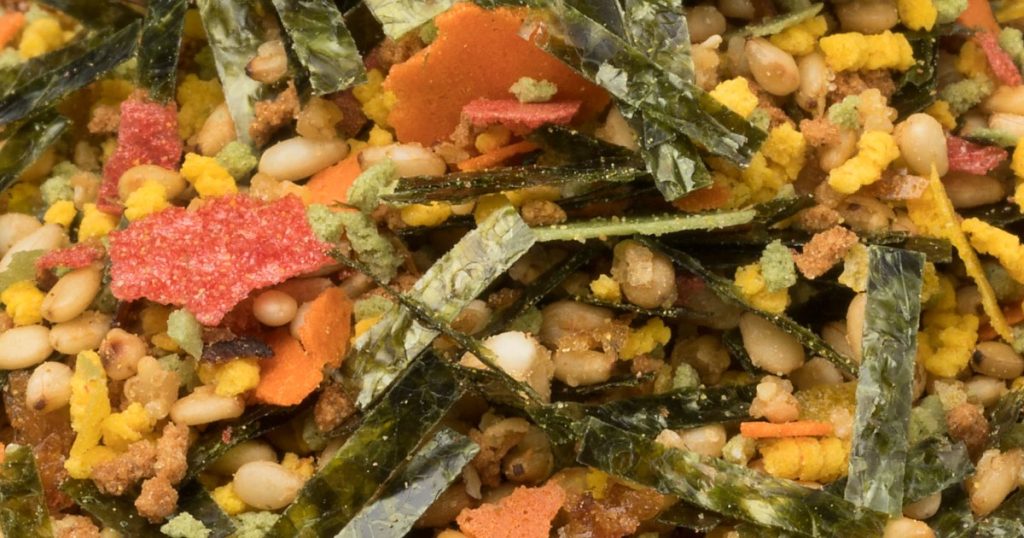
To understand why this seasoning works so well, you have to look at what is inside. There is no single recipe for it, but most Japanese furikake ingredients follow a specific formula designed to hit different parts of your palate.
The first pillar is toasted sesame seeds. These provide a nutty aroma and a very subtle, oily richness. Because they are toasted, they offer a light crunch that stands out against the softer ingredients in the bowl. Next is the nori, or dried seaweed. This is usually shredded into tiny strips or ground into a powder. The seaweed brings a natural, oceanic saltiness that reminds you of the sea without being overpowering.
Another traditional ingredient is katsuobushi, which is fermented and dried fish flakes. These flakes add a deep, smoky, and savory layer to the mix.
Finally, a small amount of sea salt and a pinch of sugar are often added to the blend. This tiny bit of sweetness is crucial because it helps pull the savory and salty flavors together, ensuring the seasoning is balanced rather than just being salty.
The Science of Umami
The reason people find furikake so addictive is because of a concept called umami. In the culinary world, umami is known as the fifth taste, alongside sweet, sour, salty, and bitter. It is often described as a savory or meaty flavor that makes your mouth water and leaves you feeling satisfied.
Furikake is essentially an umami bomb. When you combine the glutamates found in the seaweed with the proteins in the fish flakes and the fats in the sesame seeds, a chemical reaction happens on your tongue. This synergy makes the flavor of the fresh salmon or tuna in your bowl taste even more intense. It enhances the natural sweetness of the seafood without needing to add a lot of extra salt or heavy dressings. It is the reason why a bowl with furikake feels so much more flavorful than one without it.
Modern Varieties and Dietary Trends
As the popularity of poke has grown, so has the variety of seasonings available. While the traditional version with fish flakes is still a favorite, modern trends have led to new versions that fit different lifestyles.
For example, vegan and vegetarian versions of furikake are now very common. Instead of using dried fish flakes, these blends use ingredients like powdered shiitake mushrooms or extra types of kelp to provide that savory umami kick. There are also spicy versions that include wasabi peas or dried chili flakes for people who want their poke bowl toppings to have a bit of a bite. At Olu Olu, we make sure our seasoning complements the overall profile of our signature bowls, ensuring that whether you are eating fish or tofu, the seasoning helps the ingredients shine.
The Nutritional Profile
Interestingly, furikake was not originally created for chefs; it was created by a pharmacist. Over a hundred years ago, it was developed as a health supplement to help people get more calcium and minerals in their diet.
Even today, it remains a nutrient-dense addition to your meal. The sesame seeds are a great source of healthy fats and minerals like magnesium and calcium. The seaweed is packed with iodine, which is important for thyroid health, and it also contains various vitamins. Because it is used as a dry seasoning, it allows you to add a massive amount of flavor and nutrition to your meal without adding the extra calories or sugars often found in heavy, bottled dressings.
Why It Matters in a Poké Bowl
So, why is this specifically so important for a poke bowl? It comes down to two things: texture and cohesion.
First, the texture. Most of the ingredients in a poke bowl, like the fish, the rice, and the avocado, are soft or buttery. While that is delicious, your brain enjoys a contrast. The micro-crunch of the furikake seeds provides that tiny bit of resistance that makes the eating experience more interesting.
Second, it acts as a bridge. Because the seasoning is dry and flaky, it helps the house-made sauces grip onto the pieces of fish and the grains of rice. Instead of the sauce just sliding to the bottom of the bowl, the furikake helps it stay exactly where you want it. This ensures that the furikake taste and uses are maximized, giving you a consistent flavor from the first bite to the last.
Conclusion
While the big cuts of fresh fish and the colorful toppings usually get all the attention, it is the small details that make a meal truly great. Furikake is the unsung hero of the poke world. It brings history, science, and a perfect balance of flavor to every bowl we serve.
The next time you visit us, take a moment to notice that savory crunch on top of your rice. It is that little extra effort in the ingredients that makes us the best poke restaurant in Montreal. We believe that every layer of your meal should be intentional, and this traditional seasoning is the perfect example of that philosophy.
Come visit us at Olu Olu to see how this secret ingredient brings your favorite bowl to life.
FAQs
1. Does furikake contain gluten?
Some versions of furikake contain soy sauce or other additives that may have gluten. If you have a gluten sensitivity, it is always best to check with the staff about the specific blend being used.
2. Is furikake very salty?
While it has a savory flavor, it is generally much lower in sodium than pouring extra soy sauce over your bowl. It uses the natural saltiness of seaweed to provide flavor.
3. Can I buy furikake to use at home?
Yes, it is widely available in most Asian grocery stores. It is a great way to add flavor to plain rice, eggs, or even popcorn.
4. Is all furikake made with fish?
No, wide modern varieties are made specifically for vegans and vegetarians using plant-based ingredients like mushrooms and seeds to create that savory taste.
5. How do you pronounce it?
It is pronounced foo-ree-kah-kay. It is a four-syllable word where each syllable is given equal weight.